
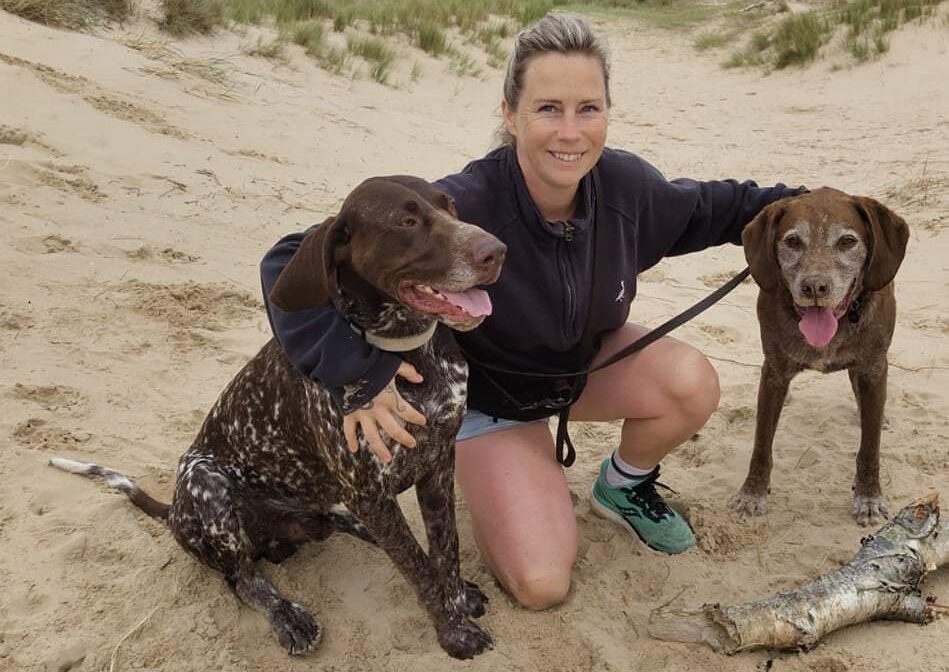
A passionate advocate for animal welfare and evidence-based training has stepped into a new leadership role at Helpful Hounds Assistance Dogs, as Keren McIlwain is appointed Head of Welfare and Behaviour.
Keren’s appointment marks an important step forward for the charity as it continues to strengthen its welfare-led approach to assistance dog training and work towards full membership with Assistance Dogs International (ADI).
With a background in animal welfare, mental health, and clinical animal behaviour, Keren brings both professional expertise and lived experience to the role. Her journey into the sector began during the Covid-19 pandemic, when she decided to pursue her passion for helping both dogs and people.
“I wanted to become a dog behaviourist not just to work with dogs and complex behaviours, but to work with families too, helping improve their lives,” said Keren. “I genuinely enjoy helping dogs and humans understand each other better.”
Keren holds a Bachelor’s degree in Animal Welfare and Behaviour and recently completed a Master’s degree in Clinical Animal Behaviour. Her master’s thesis explored the experiences of owner-trained assistance dog partnerships across the UK, research that has since shaped much of her work at Helpful Hounds.
Her new role focuses on embedding welfare-first practices throughout the organisation, supporting trainers, guiding families, assessing dogs for the charity’s community dog programme, and helping develop training standards aligned with ADI expectations.
“Welfare-first means focusing not just on trained responses, but on the dog’s physical and emotional wellbeing,” Keren explained. “If a dog’s needs aren’t being met, you can’t expect reliable, confident behaviour no matter how much training you put in.”
Under Keren’s guidance, Helpful Hounds has already introduced a more structured welfare-led framework, including the use of the Five Domains welfare model and the Least Intrusive, Minimally Aversive (LIMA) training approach. She has also developed a new training handbook designed to create consistency across the organisation and better support trainers, volunteers, dogs and families.
Keren believes one of the biggest misconceptions surrounding assistance dogs is that they are “always working”. “In reality, a well-supported assistance dog should have opportunities to rest, play, socialise and simply enjoy being a dog,” she said. “Meeting those needs is exactly what enables them to work well.” One example of this approach involved two young assistance dogs struggling to focus during formal group sessions. By allowing the dogs time to socialise and play together, trainers saw a significant improvement in their concentration and training outcomes. “Training became easier once their basic social needs were met,” Keren added. “Now we actively encourage families to meet up regularly.”
Looking ahead, Keren hopes to continue raising welfare standards, develop further CPD opportunities for trainers, and help shape a more evidence-based future for assistance dog training. “To me, revolutionising training is about changing the mindset,” she said. “It’s moving away from asking, ‘Can the dog do the task?’ and instead asking, ‘Is this dog thriving while doing it?’”
Helpful Hounds supports families through assistance dog partnerships designed to improve independence, confidence and quality of life, while ensuring the welfare of the dogs remains central to every stage of training and support.
For more information about Helpful Hounds and how their assistance dogs make a difference, please visit www.helpfulhounds.org.uk or contact the team on 01202 591602 / admin@helpfulhounds.org.uk.